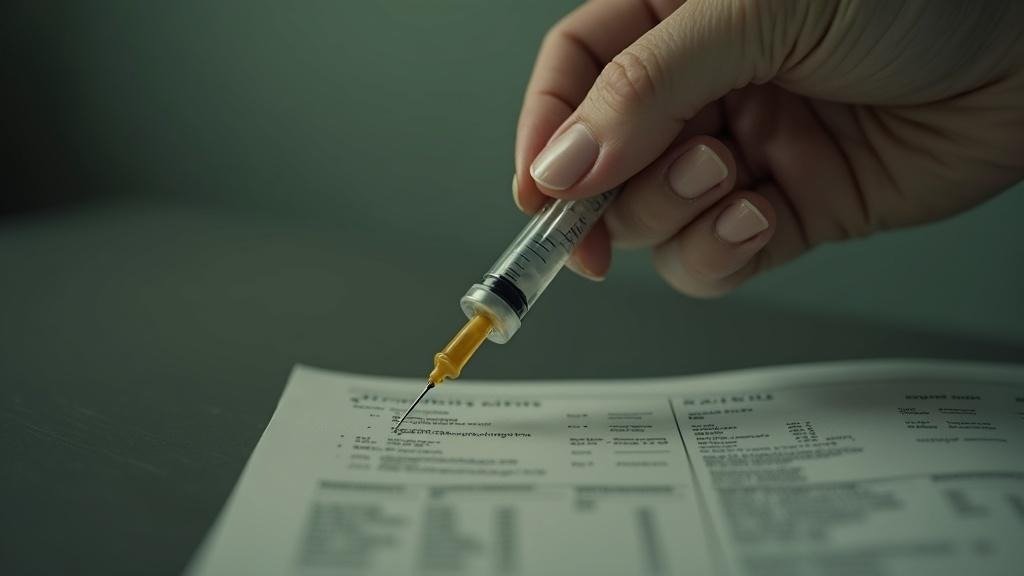
The single thing that gets people into trouble with peptide dosing is not the biology. It is the unit math. A U-100 insulin syringe holds 100 units in one milliliter, and most healing peptides are measured in micrograms while vials are labeled in milligrams. Miss the 1,000-fold conversion between mg and mcg once and you have pulled ten times your intended dose. That is the problem every tool on this list tries to solve, in different ways and with very different levels of care.
Here is how they actually stack up.
1. FormBlends Peptide Calculator
Start here. The reason is simple: it shows you the arithmetic.
Most online calculators spit out a number with no explanation. This one displays the concentration calculation step by step, so you can follow the logic and catch any input error yourself. You enter the vial size, the volume of bacteriostatic water you added, and your target dose per injection. It returns the exact units to draw, the concentration per mL, and the number of doses left in the vial. That last output alone saves a lot of back-of-envelope confusion.
It defaults to U-100 syringes but switches to U-50 or U-40 without making you rebuild the inputs. A visual fill bar shows where your dose sits on the barrel. One-tap presets cover BPC-157 (5 mg and 10 mg vials), TB-500, ipamorelin, tesamorelin, and GLP-1 compounds. The mg-to-mcg conversion happens automatically, which matters because swapping those two units is the most common serious dosing error in this space.
It is a free web tool. No account required. The same calculator is also built into the FormBlends mobile app, which bundles a 55-compound reference library, dose logging, and an injection-site rotation map in one place.
Worth saying plainly: this tool tells you how to measure a dose you already have from a provider. It gives you no guidance on which dose is appropriate for you.
2. PeptideFox
PeptideFox (peptidefox.com) covers more than 30 named peptides and includes something most competitors skip: guidance on BAC water volume that keeps your insulin unit draws in a clean, easy-to-read range. If you add too little water, you end up drawing fractional units that are hard to measure accurately. PeptideFox addresses that tradeoff directly. The visual guide is genuinely useful for first-time reconstitutions.
3. PeptideDeck
Clean and mechanical. You enter milligrams of peptide, milliliters of BAC water, and your target micrograms per dose. PeptideDeck returns the concentration and the draw volume in insulin units. No presets, no extras. Fast to use if you already know your inputs and just need the output confirmed.
4. MyPeptideMatch
Free and covers a wider range of compounds than most, including BPC-157, TB-500, semaglutide, tirzepatide, and other injectables that have moved from clinical to research-adjacent conversations. Worth bookmarking if you are working with GLP-1 class peptides specifically.
5. LeadWest Medical
LeadWest presents its calculator in a medical-practice context. The compound list includes retatrutide, BPC-157, TB-500, ipamorelin, CJC-1295, tesamorelin, sermorelin, and GHK-Cu. The clinical framing adds some credibility compared to anonymous pages, though you should still verify any output independently.
6. Outliyr
Outliyr covers BPC-157, TB-500, ipamorelin, CJC-1295, tesamorelin, GHK-Cu, and GLP-1 class compounds. It sits inside a broader biohacking information site. The calculator is functional and the surrounding context is educational, which helps newer users understand why the numbers matter.
7. peptidereconstitutecalculator.com
Narrow focus. This one is built specifically for BPC-157 and walks through the mcg-to-units conversion on U-100 syringes step by step. If BPC-157 is all you are working with, the specificity is an advantage. Not much use beyond that single compound.
8. Prime Peptides Calculator
Attached to the Prime Peptides vendor site. Functional for basic reconstitution math. Keep in mind that vendor-hosted tools exist partly as a sales touchpoint, so cross-check outputs with a neutral source.
9. peptides.org Dosage Charts
Static reference material rather than an input-driven tool. Useful for sanity-checking typical dose ranges for common peptides before you run the reconstitution numbers elsewhere. Think of it as a reference layer, not a calculation tool.
10. Manual Calculation
Genuinely worth including. The formula is not complicated: divide your target dose in mcg by the concentration in mcg/mL, then multiply by 100 to get units on a U-100 syringe. Knowing how to do this by hand means you can verify any tool’s output and catch a software error or a misread input before it matters.
*None of the tools on this list replace instructions from a licensed prescriber. They are unit-conversion aids. If you are uncertain about a dose, that conversation belongs with a qualified clinician, not a webpage.*
Common Questions
Does the FormBlends calculator work for GLP-1 peptides like semaglutide and tirzepatide, or only healing peptides?
Yes, FormBlends includes one-tap presets for GLP-1 class compounds alongside healing peptides like BPC-157 and TB-500. The same mg-to-mcg auto-conversion applies. That said, GLP-1 dosing protocols tend to involve titration schedules that a reconstitution calculator alone cannot map out for you.
Why does PeptideFox give BAC water volume recommendations when other calculators just take whatever number you enter?
The amount of water you add changes your concentration, which changes how many units you draw per dose. Too little water and you are drawing fractions of a unit, which a standard insulin syringe cannot measure reliably. PeptideFox builds in guidance on this tradeoff so your draw lands in a readable, accurate range on the barrel.
If peptidereconstitutecalculator.com only handles BPC-157, is there a reason to use it over a general tool like PeptideDeck?
Specificity has real value when you are new to a compound. The BPC-157 calculator walks through the mcg-to-units conversion explicitly, which a no-frills general tool skips. Once you understand the math, a general calculator is faster. For a first reconstitution, the step-by-step format reduces the chance of a misread input.
Should I trust the outputs from a vendor-hosted tool like the Prime Peptides calculator the same way I would trust a neutral site?
Vendor tools use the same basic arithmetic, so the math is not inherently wrong. The concern is that vendor pages have a commercial interest in keeping you on their site. Run the same inputs through a neutral tool, FormBlends or PeptideDeck for example, and compare. If the numbers match, you are fine.
What is the actual formula for manual calculation, and when does it matter more than using an app?
Divide your target dose in micrograms by the concentration in mcg/mL, then multiply by 100 to convert to units on a U-100 syringe. It matters most when an app gives you a result that feels off, when you are working with an unusual vial size, or when you simply want to confirm that a tool has not misread one of your inputs before you draw.
Sources
- U-100 syringe volume standards: FDA drug labeling guidelines and insulin syringe manufacturer specifications
- BPC-157 and TB-500 typical research dose ranges: published pharmacology literature and peptide reference databases
- PeptideFox feature descriptions: peptidefox.com public interface (2025-2026)
- FormBlends mobile app feature set: App Store and Google Play public listings
- peptides.org: public dosage reference charts, peptides.org